Door Hinges and Seals: How Small Details Shape Door Feel, Wind Noise, and Cabin Cleanliness Years Later
When people judge a carâs quality, they rarely mention door hinges or sealing strips. Yet after five or ten years of ownership, these two components quietly determine whether a car still feels solidâor starts to feel tired. Door texture when closing, high-speed wind noise, persistent interior dust, and even long-term repair costs are all deeply tied to hinge precision and sealing integrity.
As someone who has spent years analyzing long-term durability data, warranty claims, and owner feedback across global markets, I can say this clearly: hinges and seals are not cosmetic detailsâthey are structural quality multipliers.
Why Door Hinges and Seals Matter More Than Most Owners Think
From a mechanical standpoint, a car door is a heavy, cantilevered structure that is opened and closed tens of thousands of times over its life. Every cycle places load on hinges and compression stress on seals. If either component degrades unevenly, the door no longer sits in its designed position, even if body panels appear unchanged.
Long-term ownership studies consistently show that complaints about wind noise, rattles, and dust intrusion often begin after 3â5 years, long before major powertrain issues emerge. Consumer Reportsâ reliability surveys note that âbody hardwareâ issuesâincluding door alignment and sealingârise steadily with vehicle age, especially in high-mileage vehicles (Consumer Reports, 2023).
In practical terms, a worn hinge subtly drops the door by 1â2 millimeters. That small change is enough to reduce seal compression, increase airflow turbulence, and create a path for dust and moisture. Owners often blame âpoor sound insulation,â when the real issue is mechanical aging.
Door Hinges: The Hidden Foundation of Long-Term Door Quality
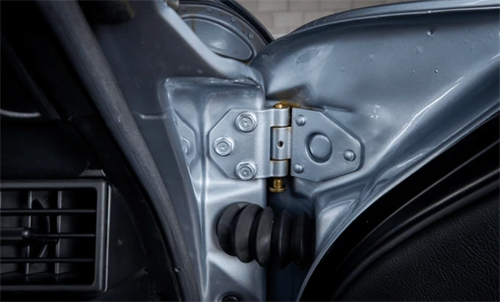
Door hinges determine how a door moves, where it rests, and how evenly it presses against the body seal. High-quality hinges are designed not just for strength, but for dimensional stability over time.
Mainstream sedans such as the Toyota Camry and Volkswagen Passat use high-strength alloy steel hinges with electrophoretic anti-corrosion coatings. According to supplier data disclosed in SAE technical papers, these hinges are typically tested for 100,000â120,000 open-close cycles, equivalent to over 12 years of average use. More importantly, the pivot clearances are tightly controlledâoften below 0.01 mmâso wear progresses slowly and evenly.
Premium brands invest further. Mercedes-Benz, for example, uses forged aluminum hinges with self-lubricating bushings on models like the E-Class. Internal NVH testing data cited by German supplier Brose indicates door-opening noise levels below 30 dB, even after extended durability testing. This is why older luxury sedans often still âthudâ satisfyingly when closed.
By contrast, cost-driven designs with simpler stamped hinges and loose tolerances tend to develop play earlier. Once that play appears, no amount of seal replacement can fully restore the original feel.
How Hinge Aging Changes Door Feel Over Time
Hinge aging rarely announces itself dramatically. Instead, owners notice subtle changes: the door needs more force to close, alignment feels slightly off, or the latch no longer engages as smoothly.
These symptoms come from micro-wear at the hinge pin and bushing interface. Industry teardown analyses show that once radial clearance exceeds about 0.2 mm, door alignment begins to drift under its own weight. This is especially noticeable on long, frameless doors used in coupes and SUVs.
What matters most is not hinge material alone, but surface treatment and lubrication strategy. Hinges with dry steel-on-steel contact wear much faster than those using polymer or sintered bronze bushings. This explains why some economy cars feel âlooseâ after six or seven years, while others remain tight well into their second decade.
Door Seals: The Real Gatekeepers of Wind Noise and Dust
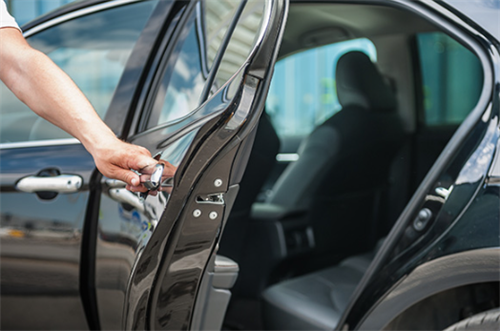
If hinges define position, seals define isolation. Door seals must block air, water, and dust while flexing thousands of times per year. Their performance depends on material elasticity, cross-section design, and resistance to aging.
Independent NVH tests conducted by automotive media and suppliers show that effective door sealing can reduce high-speed wind noise by 10â20 dB, depending on vehicle class. In one widely cited test, adding high-density EPDM seals reduced measured wind noise at 80 km/h from 72 dB to 53 dB on a compact SUV platform.
Seals also play a major role in dust control. Poor sealing allows negative cabin pressure at speed to draw fine particles inside. Over time, this not only dirties interiors but accelerates wear on hinges and latches due to trapped moisture and grit.
Material Choices and Their Long-Term Consequences
Most mass-market vehicles use EPDM rubber seals because of their cost-effectiveness and weather resistance. However, EPDM typically hardens after 3â5 years of UV and ozone exposure, especially in hot climates. As elasticity drops, sealing force declines even if the seal appears visually intact.
Higher-end vehicles increasingly use polyurethane or multi-layer composite seals. These materials maintain elasticity across a wider temperature range, from â40°C to 120°C, and show significantly slower compression set in laboratory aging tests (SAE International, 2022).
Memory-foam-based seals, now appearing in premium EVs and MPVs, perform exceptionally well for high-frequency noise but are sensitive to contamination and improper installation. Their benefits are realâbut only when paired with precise hinge alignment.
The Interaction Between Hinges and Seals: A System, Not Two Parts
A critical insight often missed in online discussions is that hinges and seals form a single mechanical system. A perfect seal cannot compensate for a sagging door, and a perfect hinge cannot overcome hardened rubber.
Long-term teardown studies show that many âseal failuresâ are actually hinge-related. When doors drop slightly, seals are compressed unevenly, accelerating aging on one side while leaving gaps on the other. This is why replacing seals alone sometimes delivers disappointing results.
Automakers that design hinges and seals togetherâmatching door closing arcs, compression rates, and material aging curvesâconsistently score higher in long-term satisfaction surveys.
Real-World Cases: Why Some Cars Age Gracefully
Toyotaâs mid-size sedans are often criticized for lacking flair, but owner data shows exceptional long-term door integrity. Even after 10 years, hinge wear rates and seal replacement frequency remain low. This is not accidentalâit reflects conservative hinge geometry and moderate seal compression that avoids overstressing materials.
Mazda provides another instructive example. Many recent models retain physical door limiters and robust hinge structures while using relatively soft seals. This combination preserves door feel without relying on excessive seal stiffness, improving durability.
Conversely, some early-generation EVs prioritized flush design and weight reduction, using thinner seals and lighter hinges. While visually appealing, owner feedback after five years frequently mentions increased wind noise and dust ingressâissues tied directly to these early design choices.
Long-Term Cost Implications for Owners
From a financial perspective, hinge failures are rare but expensive when they occur, often requiring door realignment or structural repair. Seal replacement is more common and less costly, typically ranging from $150 to $600 per door depending on vehicle class and labor rates.
Industry repair cost surveys from organizations like the Auto Care Association indicate that proactive seal replacement every 5â7 years can prevent secondary issues such as latch wear, corrosion, and interior trim damageâsaving money over a full ownership cycle.
The key takeaway: cheap seals and marginal hinges donât save money long termâthey defer costs and amplify them later.
Practical Guidance for Long-Term Owners and Buyers
For buyers planning to keep a car beyond five years, door behavior during a test drive is surprisingly revealing. Uneven resistance, audible hinge noise, or doors that require slamming are early warning signs.
Look for vehicles that retain physical door limiters, consistent closing force, and visible multi-layer seals. Brands that emphasize ergonomics and mechanical refinementârather than minimalism aloneâtend to perform better over time.
For current owners, periodic inspection matters. Cleaning seals, maintaining hinge lubrication, and addressing minor alignment issues early can extend system life significantly. These are small interventions with outsized impact.
Door hinges and seals rarely appear in marketing brochures, yet they shape daily experience more than many high-tech features. Over years of use, they decide whether a car feels solid or worn, quiet or tiring, clean or dusty.
From a long-term ownership perspective, these components are not detailsâthey are indicators of engineering philosophy. Cars that age well do so because their smallest parts were designed with the longest horizon in mind.
References:
[1]Consumer Reports. (2023). Auto reliability survey: Body hardware and long-term durability trends. Consumer Reports Publishing.
[2]SAE International. (2022). Automotive hinge design, wear mechanisms, and durability testing (SAE Technical Paper Series).
[3]Brose Group. (2023). Door systems and NVH performance in passenger vehicles. Industry White Paper.
[4]Auto Care Association. (2024). Vehicle maintenance and repair cost survey: Body and sealing components. Auto Care Association Research.
Recommended for you