Long-Term Test of the Volkswagen ID.4 CROZZ: Are Traditional Automakers Too Slow with Software Updates?
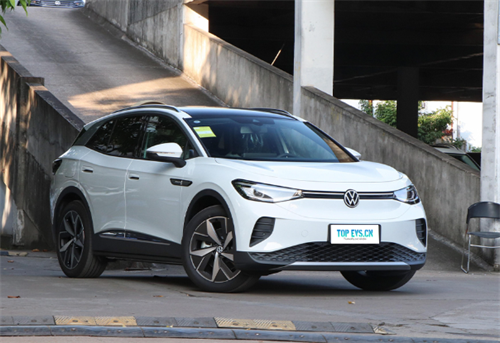
Volkswagen has long been recognized as a benchmark in mass-market automotive engineering. Its reputation was built on dependable chassis tuning, conservative yet durable design, and industrial-scale quality control. However, the transition from internal-combustion vehicles to software-driven electric vehicles has fundamentally reshaped what âengineering excellenceâ now means. The Volkswagen ID.4 CROZZ, one of the earliest joint-venture EVs produced in China, sits at this intersection. On paper, it offers precisely what rational family buyers want: a mature MEB platform, long driving range, stable handling, and the reassurance of a global brand. Yet real-world ownership over more than 30,000 kilometers and two years reveals a more nuanced story, where hardware maturity increasingly clashes with software inertia.
Ownership Background
When the ID.4 CROZZ entered the Chinese market in 2022â2023, it filled a surprisingly narrow but strategically important segment. Buyers with budgets between 150,000 and 200,000 RMB faced a difficult choice: entry-level domestic EVs offered affordability but limited range, while higher-end domestic models provided advanced software and intelligent features at prices above 250,000 RMB. Joint-venture EVs were scarce and generally conservative in specification.
Against this backdrop, the ID.4 CROZZâs combination of a 77â84 kWh ternary lithium battery, a CLTC range exceeding 550â600 kilometers, and a transaction price around 195,000 RMB after subsidies made it unusually competitive. For buyers with prior Volkswagen or Audi experience, the vehicle also minimized behavioral adaptation. Pedal calibration, steering feedback, braking response, and interior logic all closely mirrored traditional gasoline vehicles, reducing the cognitive friction often associated with switching to new-brand EVs.
Real-World Range Performance
Over long-term use, the ID.4 CROZZ demonstrates range consistency rather than spectacular headline numbers. Data collected across more than 30,000 kilometers shows that urban driving typically consumes 13â14 kWh per 100 kilometers, while sustained highway speeds of 100â120 km/h increase consumption to 16â18 kWh per 100 kilometers. Pure highway testing reveals achievable ranges of 410â440 kilometers, and mixed daily use generally delivers between 480 and 510 kilometers. Even in near-freezing temperatures around 2°C, the vehicle retains roughly 84 percent of its nominal range.
This performance is consistent with independent assessments conducted by the China Automotive Technology & Research Center (CATARC, 2023), positioning the ID.4 CROZZ as above average compared to non-800V EVs regarding winter range stability.The reason for this reliability lies in Volkswagenâs system-level integration rather than battery chemistry alone. Conservative power calibration reduces peak inefficiencies, aerodynamic optimization improves highway efficiency, and NVH tuning minimizes parasitic losses, resulting in a stable range display that avoids the abrupt drops seen in some competing models.
Charging Behavior and Energy Costs:
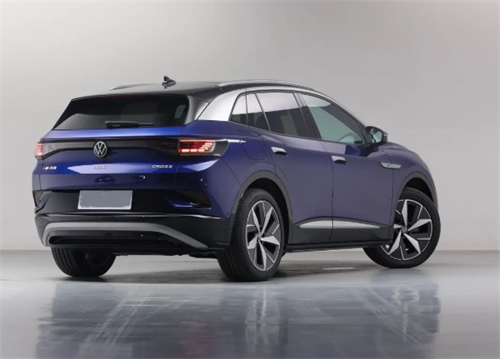
The ID.4 CROZZ does not chase peak charging numbers but prioritizes predictability, which matters more for long-term ownership. DC fast charging from 30 to 80 percent takes around 40 minutes, a figure that remains consistent across temperature variations. Early models were limited to 7â7.5 kW AC charging, which prolongs overnight home charging sessions and reduces flexibility for spontaneous long trips.
Over two years, recorded data indicates that off-peak home electricity costs average about 0.3 RMB per kWh, translating to roughly 56 RMB for a full charge and energy costs of approximately 0.07 RMB per kilometer. For an owner used to a gasoline SUV consuming 8â9 liters per 100 kilometers, this results in annual energy savings of 8,000 to 10,000 RMB for average commuting patterns.
Chassis Tuning and Driving Experience:
Although the ID.4 CROZZâs 150 kW motor and 0â100 km/h acceleration time of 8.5 seconds appear modest on paper, real-world driving is more satisfying than specifications suggest. Linear throttle mapping prevents the abrupt surge common to many electric vehicles, while the rear-wheel-drive layout allows for an unusually tight 4.85-meter turning radius. The five-link rear suspension maintains composure over uneven pavement, providing a smooth and controlled ride.
Many owners transitioning from gasoline sedans describe the vehicle as intuitively easy to handle, particularly in dense urban environments. Noise suppression, vibration isolation, and body control remain distinctively âGerman,â and at highway speeds, cabin quietness surpasses that of many newer domestic EVs that prioritize acceleration over refinement (J.D. Power China EV Study, 2024).
Interior Design Philosophy:
Volkswagenâs interior design prioritizes clarity and function over flashiness. Instrumentation is logically organized, visual clutter is minimal, and the HMI layout is conservative but intuitive. The relatively low seating H-point improves long-distance comfort, reinforcing the vehicleâs suitability for daily commuting and extended trips. Nevertheless, cost-saving measures are noticeable over time. Hard plastics, firm seat fabrics, and the absence of wireless charging, dash cameras, and power tailgates are evident. While individually minor, these omissions collectively affect the perception of value, especially when compared to feature-rich domestic competitors.
Software and Infotainment:
The most controversial limitation of the ID.4 CROZZ is its infotainment system. While functional, it evolves slowly. The app ecosystem is limited, cold-start responsiveness can lag, OTA updates primarily address bugs rather than adding features, and post-purchase functional expansion is minimal. Owners report recurring issues such as black screens at low temperatures, network failures during cold starts, UI freezes during charging, and charging interfaces that interrupt other functions.
Firmware updates reduce the frequency of these problems but do not fundamentally expand capabilities. McKinsey & Company (2024) notes that such limitations stem from legacy supplier-dependent architectures, safety-first validation cycles, fragmented regional teams, and a hardware-centric development culture. The evolution of Volkswagenâs ID.OS platform reflects these structural constraints.
Driver Assistance Systems:
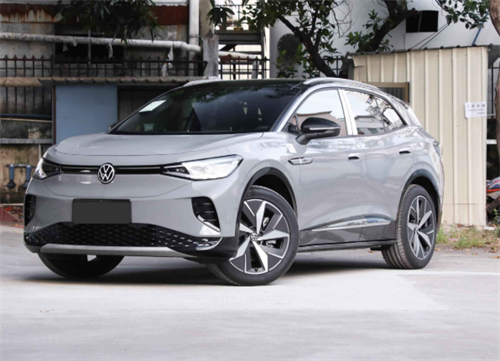
The ID.4 CROZZâs Level-2 driver assistance systems are reliable but conservative. Adaptive cruise control operates smoothly, and lane assistance intervenes predictably rather than aggressively. System disengagements during poor weather are handled safely. However, there is no adaptive learning or advanced lane-centering, which differentiates it from newer domestic solutions. For drivers seeking safety and consistency over advanced features, this predictability is a benefit, as it reduces fatigue on long trips without introducing unexpected behavior.
Long-Term Reliability and Battery Performance:
After more than two years and frequent fast-charging, owners report minimal range degradation, stable charging performance, and no thermal incidents. Battery capacity loss is around three percent, consistent with TÃV findings (2023). Volkswagenâs conservative approach to thermal management and charging strategies prioritizes long-term stability over short-term performance metrics, demonstrating the advantage of cautious engineering in electric vehicle longevity.
Purchase Considerations:
At a price range equivalent to 170,000â180,000 RMB, the ID.4 CROZZ is a rational purchase for buyers who prioritize mechanical stability, predictable ownership costs, and long-term reliability. It is especially suitable for families, drivers transitioning from gasoline vehicles, and those valuing brand trust and resale stability. Buyers seeking continuous software upgrades, advanced voice interaction, or deep ecosystem integration may find the vehicle limiting. As prices increase, the software stagnation becomes a more significant consideration, potentially impacting perceived value.
The Volkswagen ID.4 CROZZ demonstrates that traditional automakers are still capable of producing fundamentally excellent electric vehicles. Its shortcomings stem not from technical incompetence but from organizational inertia and a development philosophy that favors reliability over rapid iteration. Slow software evolution may frustrate some tech-focused users, but for those who view a car primarily as a reliable transport tool rather than a digital device, the ID.4 CROZZ remains one of the most rational EV choices of its generation.
References:
[1] CATARC. (2023). China electric vehicle winter performance evaluation report. China Automotive Technology & Research Center.
[2] J.D. Power. (2024). China new energy vehicle experience index study. J.D. Power Asia Pacific.
[3] McKinsey & Company. (2024). Software-defined vehicles: Why legacy automakers struggle. McKinsey Automotive Practice.
[4] TÃV Verband. (2023). Electric vehicle reliability and battery durability report. TÃV Germany.
[5] Volkswagen AG. (2023). MEB platform technical white paper. Volkswagen Group Technical Development.
Recommended for you