Toyota Hilux: Thai-Built vs South African-Built Models Compared on Quality, Durability, and Long-Term Ownership
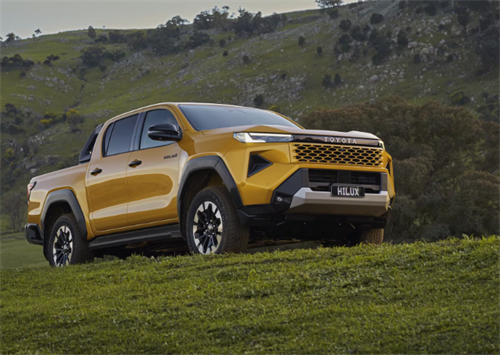
In Southeast Asia, the Toyota Hilux occupies a cultural space few vehicles anywhere in the world can claim. It is not aspirational in the traditional sense, nor is it purchased for novelty or indulgence. Instead, it is chosen because experienceâoften across generationsâhas demonstrated that it works, keeps working, and rarely surprises its owner in expensive ways. This reputation has earned it an informal title as the regionâs âsuper car,â a term that reflects durability, economic rationality, and trust rather than performance metrics.
Yet the Hilux is not a singular object. While its engineering DNA is globally shared, it is produced in multiple countries, with Thailand and South Africa serving as Toyotaâs two most influential manufacturing bases outside Japan. On paper, these vehicles appear identical. In practice, they emerge from different industrial environments shaped by production scale, supply-chain maturity, and regional usage demands. The question that naturally follows is whether these differences meaningfully affect craftsmanship, quality, and long-term ownership outcomes once the vehicle leaves the showroom and enters real life.
Why Thailand Sits at the Center of the Hilux Universe?
Thailandâs role in the Hilux story is not incidental, nor is it limited to production volume alone. It is structural. Since the launch of Toyotaâs Innovative International Multi-purpose Vehicle (IMV) program in the early 2000s, Thailand has functioned as the primary hub for one-ton pickup development, validation, and global distribution. This decision was rooted in geography, labor capability, and policy stability, but its long-term consequences extend directly into ownership experience.
Toyotaâs investment transformed Thailand into one of the most concentrated pickup manufacturing ecosystems in the world. Local content levels for Hilux models have reached approximately ninety-five percent, meaning that the vast majority of componentsâfrom stamped body panels to suspension partsâare sourced domestically. Over time, this localization created a dense supplier network whose survival depends heavily on Hilux continuity. For owners, this translates into unusually stable parts availability and pricing, even as vehicles age beyond their warranty periods.
Equally important is Thailandâs role in feedback-driven engineering. Toyota Motor Thailand participates directly in durability testing and supplier audits, forming a short feedback loop between field failures and engineering revisions. When recurring issues appear in export marketsâwhether related to corrosion resistance, suspension wear, or fuel toleranceâthose lessons often flow back into Thai-led updates that quietly improve future production. This process is invisible to consumers but accumulates value over millions of units.
The result is not a Hilux that feels dramatically different at delivery, but one whose long-term repairability and consistency tend to remain intact well into high-mileage ownership. That is why Thai-built Hilux models dominate export markets ranging from Australia to the Middle East and Africa, where durability expectations are particularly unforgiving.
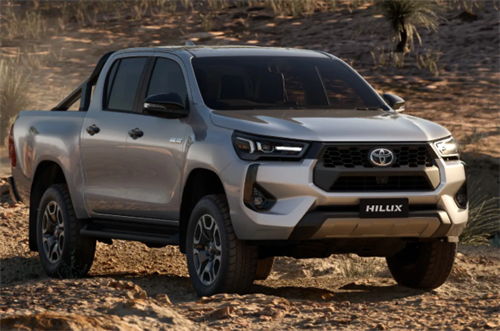
South Africaâs Hilux: Built for Load, Distance, and Harsh Reality
South Africaâs role in Hilux production is more focused but no less significant. Toyota South Africa Motors operates as a regional anchor for Southern Africa, producing vehicles optimized for long distances, heavy loads, and prolonged exposure to gravel roads and high ambient temperatures. While production volume is lower than Thailandâs, the operational demands placed on Hilux vehicles in this region are often more severe.
From an ownership standpoint, South African-built Hilux models benefit from regional adaptation rather than scale-driven refinement. Suspension tuning, cooling system robustness, and drivetrain calibration are all validated against conditions that mirror commercial use more closely than urban commuting. This contributes to the Hiluxâs strong reputation among farmers, contractors, and fleet operators across the region.
However, lower production volume and higher reliance on imported components introduce different long-term dynamics. Parts pricing can be more sensitive to currency fluctuations, and replacement availability for certain non-core components may depend more heavily on dealership networks. These factors do not compromise reliability, but they can influence maintenance economics as vehicles age.
Crucially, independent ownership data does not indicate systemic quality disadvantages in South African-built models. Instead, it shows that these vehicles age predictably, with wear patterns aligned closely to usage intensity rather than assembly origin. In practical terms, the South African Hilux is shaped more by how it is used than by where it is built.
Craftsmanship Beyond the Showroom: Consistency Over Time
Toyotaâs global manufacturing philosophy minimizes dramatic variation in core quality between plants. Chassis design, engine architecture, and drivetrain specifications are standardized, and final inspection criteria are globally aligned. As a result, catastrophic build-quality differences between Thai-built and South African-built Hilux vehicles are virtually nonexistent.
Where subtle distinctions emerge is in long-term consistency rather than initial craftsmanship. High-volume plants such as Thailand benefit from deeply specialized labor roles and highly automated processes that prioritize repeatability. Over hundreds of thousands of units per year, even small process improvements compound into measurable consistency advantages, particularly in areas such as panel alignment, paint application, and interior fit.
In lower-volume environments, assembly quality remains high, but exposure to supplier variability and logistical disruptions can introduce slightly wider tolerances over time. These differences are typically cosmetic rather than structural, manifesting as trim aging or minor finish degradation after years of use rather than as mechanical failures.
For owners, the practical implication is that both versions feel equally solid when new, but Thai-built vehicles may exhibit marginally fewer age-related irritations after extended service. This distinction becomes relevant primarily for buyers planning to keep a Hilux well beyond the typical ownership cycle.
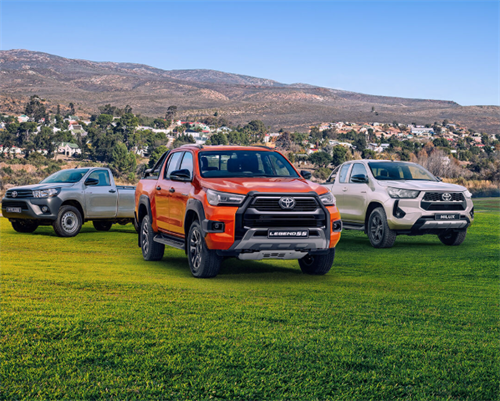
Reliability as a Function of Time, Not Origin
The Toyota Hiluxâs reliability record is best evaluated over hundreds of thousands of kilometers rather than over the first few years of ownership. Across markets, GD-series diesel engines consistently demonstrate long service lives when maintained according to factory schedules, often exceeding three hundred thousand kilometers without major internal work. Transmissions, whether manual or automatic, show similarly conservative failure rates.
Long-term service data suggests that reliability outcomes correlate far more strongly with maintenance discipline and operating environment than with manufacturing origin. Vehicles exposed to heavy loads, poor fuel quality, or extended service intervals exhibit predictable wear regardless of whether they were built in Thailand or South Africa. Conversely, well-maintained vehicles in either market tend to age gracefully.
Toyotaâs iterative engineering philosophy plays a key role here. Rather than introducing radical redesigns, Toyota favors incremental improvements informed by field data. This approach minimizes the risk of systemic failures and contributes to the Hiluxâs reputation for predictability. For owners, predictability often matters more than peak performance, particularly when downtime carries economic consequences.
The Hilux TRAVO and the Economics of Modernization
The introduction of the ninth-generation Hilux, branded as TRAVO, illustrates how Toyota balances modernization with durability. Unveiled in Thailand as a global premiere, the TRAVO integrates improvements in fuel efficiency, chassis rigidity, and electronic systems without abandoning the mechanical fundamentals that define the Hilux.
The updated 2.8-liter GD diesel engine delivers improved efficiency without aggressive downsizing, reducing thermal stress and supporting long-term reliability. Enhancements to steering systems and safety technology are framed not as luxury upgrades but as fatigue-reduction measures that indirectly lower accident-related ownership costs.
From an economic perspective, these changes matter because they improve total cost of ownership rather than headline specifications. Lower fuel consumption, reduced wear on steering components, and improved safety margins all contribute to long-term affordability, particularly in regions where vehicles are kept for extended periods.
The TRAVOâs development further reinforces Thailandâs role as a global testbed, with engineering decisions shaped by diverse real-world usage rather than by single-market optimization.
Electrification Without Abandoning Durability
The unveiling of the Hilux TRAVO-e signals Toyotaâs cautious but deliberate approach to electrification in the pickup segment. Unlike lifestyle-oriented electric pickups designed primarily for developed urban markets, the TRAVO-e retains a body-on-frame architecture and incorporates protective measures aimed at off-road and commercial use.
For long-term owners, the significance lies not in novelty but in risk management. Toyotaâs emphasis on battery protection, insurance integration, and maintenance planning reflects an understanding that adoption hinges on ownership confidence. While widespread electrification of the Hilux remains gradual, the TRAVO-e demonstrates that Toyota views durability and serviceability as non-negotiable, even in new powertrain formats.
Ownership Costs, Resale Value, and Market Confidence
Total cost of ownership varies more by market conditions than by manufacturing origin. In Thailand, dense service networks and competitive labor rates keep maintenance costs relatively low, while abundant parts availability supports long vehicle lifespans. In South Africa, higher labor and insurance costs are partially offset by structured service plans and strong resale values.
Resale data consistently shows the Hilux outperforming competitors in value retention across both regions. Importantly, used-market pricing does not meaningfully differentiate between Thai-built and South African-built models. Buyers focus on mileage, service history, and condition, implicitly signaling confidence in the platform regardless of origin.
This market behavior reinforces a critical insight: resale value reflects collective ownership experience more accurately than any single specification or marketing claim.
After examining manufacturing structures, reliability data, modernization strategies, and ownership economics, one conclusion becomes unavoidable. The Toyota Hiluxâs quality is system-driven rather than country-driven. Thailandâs scale and localization confer advantages in consistency and parts availability, while South Africaâs production emphasizes regional adaptation and heavy-duty use. Over a decade or more of ownership, these differences are secondary to maintenance discipline and operating context.
For buyers and enthusiasts alike, the lesson is clear. Choosing a Hilux should be less about where it was built and more about how it has been used and cared for.
References:
[1] Toyota Motor Corporation. (2023). Toyota Production System and global manufacturing strategy. https://global.toyota
[2] Toyota Motor Thailand. (2025). World premiere of Toyota Hilux TRAVO and TRAVO-e. Bangkok.
[3] BusinessTech. (2024). Toyota Hilux vs Ford Ranger: Long-term resale value analysis. https://businesstech.co.za
[4] Nikkei Asia. (2025). Japanese automakers adjust Southeast Asia strategy amid EV competition.
[5] Wikipedia contributors. (2024). Toyota Hilux. https://en.wikipedia.org/wiki/Toyota_Hilux
Recommended for you