Mazda CX-60 Diesel vs Gasoline: Long-Term Fuel Costs and Reliability in Europe and Japan
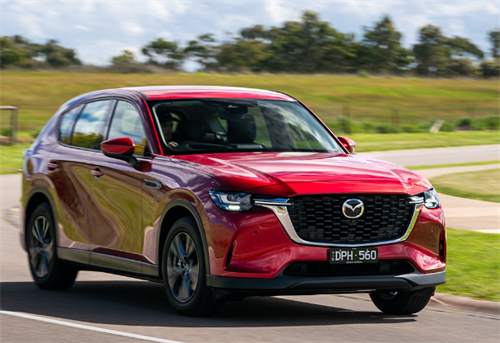
The Mazda CX-60 occupies a rare position in todayâs automotive market. It is one of the few mid-size premium SUVs still offered with a large-displacement diesel engine at a time when most competitors have abandoned diesel entirely. At the same time, Mazda continues to sell gasoline and plug-in hybrid versions of the same vehicle, creating an unusually clear opportunity to compare powertrains under identical vehicle architecture.
For buyers in Europe and Japan, the choice between diesel and gasoline CX-60 variants is not about acceleration figures or marketing slogans. It is about long-term fuel cost, mechanical reliability, and how the car behaves after 100,000 kilometers, when warranty coverage fades and ownership reality sets in.
Platform and Engineering Context: One Car, Two Philosophies
Mazda developed the CX-60 on its new large-product platform, designed for longitudinal engines and rear-wheel-drive bias. This matters because both diesel and gasoline versions share the same structural layout, suspension design, transmission, and electronic architecture. As a result, differences in ownership experience can be traced more clearly to powertrain behavior, rather than chassis or packaging compromises.
The diesel CX-60 is powered by a 3.3-liter inline-six turbo diesel paired with a 48-volt mild-hybrid system. The gasoline alternative, depending on market, is either a 2.5-liter naturally aspirated engine (Japan) or a plug-in hybrid combining a gasoline engine with an electric motor (Europe). These engines represent fundamentally different approaches to efficiency, emissions compliance, and long-term durability, which is why their real-world performance diverges significantly over time.
Real-World Fuel Consumption: What Owners Actually See
-Diesel CX-60: Efficiency That Survives Mileage
Long-term European testing consistently shows that the diesel CX-60âs fuel economy advantage is not theoretical. Fleet data and independent road tests report real-world averages between 5.5 and 6.0 L/100 km, even after extended mileage accumulation. Importantly, this efficiency remains stable as the vehicle ages, with minimal degradation reported beyond 80,000 km.
The reason lies in operating characteristics rather than engine size alone. The inline-six diesel produces strong low-end torque at modest engine speeds, allowing the vehicle to cruise at highway velocities with minimal throttle input. Owners who drive long distancesâparticularly in Germany, France, and Spainâreport refueling intervals exceeding 850â900 km, a tangible benefit for frequent travelers.
Urban usage, however, tells a different story. Short trips limit the effectiveness of the mild-hybrid system and increase particulate filter regeneration frequency. City-based owners often report fuel consumption closer to 7.0 L/100 km, narrowingâbut not eliminatingâthe diesel advantage.
-Gasoline CX-60: Predictable, but Sensitive to Driving Style
Gasoline versions of the CX-60 show far greater variance in real-world consumption. The naturally aspirated gasoline engine sold in Japan typically averages 8.5â9.5 L/100 km, with consumption rising noticeably in congested urban environments. Without turbocharging or electrification to assist low-speed operation, the engine relies more heavily on higher revs during acceleration.
The plug-in hybrid sold in Europe complicates the picture further. Owners who charge daily and drive short distances report remarkably low fuel usage, sometimes under 2.0 L/100 km in official tracking periods. However, once the battery is depleted, real-world consumption frequently climbs to 7.5â8.5 L/100 km, especially on highways where electric assistance is minimal.
This creates a sharp ownership divide: drivers with reliable home charging enjoy outstanding efficiency, while those without it often carry unnecessary battery weight with little benefit.
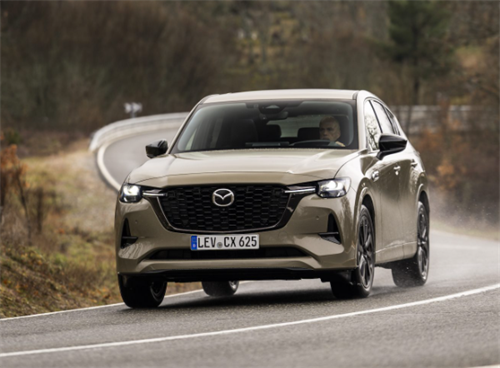
Long-Term Reliability: Failure Patterns Over Time
-Diesel Reliability: Old-School Strength with Modern Risks
Historically, large-displacement diesel engines have excelled in longevity, and the CX-60 largely follows that tradition. Early reliability data from Europe indicates low rates of catastrophic mechanical failure, even beyond 100,000 km. The inline-six configuration distributes stress more evenly than smaller turbo diesels, reducing thermal and mechanical strain.
However, modern emissions systems introduce new complexity. Diesel particulate filters (DPF) and exhaust aftertreatment components show higher intervention rates among urban-only vehicles. Owners who fail to regularly complete long-distance drives experience warning lights, forced regenerations, and in rare cases, component replacement.
Importantly, these issues are usage-dependent rather than design-flawed. High-mileage motorway users report significantly fewer emissions-related failures, reinforcing the dieselâs suitability for long-distance driving profiles.
-Gasoline Reliability: Fewer Systems, Different Weak Points
Gasoline CX-60 variants show a different reliability pattern. Mechanical engine components exhibit low failure rates, particularly in Japan where fuel quality and maintenance discipline are high. The simpler naturally aspirated gasoline engine avoids turbocharger and high-pressure diesel injection complexity, resulting in fewer major drivetrain repairs during early ownership.
However, plug-in hybrid models introduce electrical and software-related risks. European service records indicate a higher frequency of infotainment faults, charging system errors, and software recalls, especially during the first two years of ownership. While most issues are resolved through updates rather than hardware replacement, downtime and dealership visits are more common compared to diesel variants.
In long-term ownership, reliability differences become less about engine durability and more about system complexity.
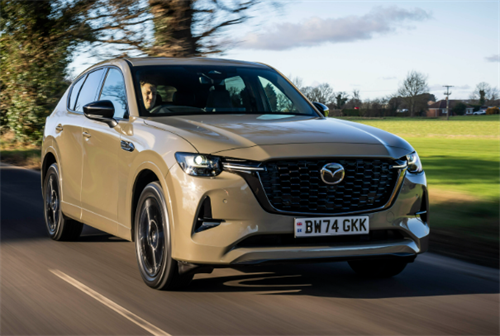
Maintenance Costs: Predictable vs Conditional Expenses
Diesel CX-60 maintenance costs tend to be front-loaded but predictable. Oil changes require higher-quality lubricants and larger volumes, and emissions system maintenance becomes a factor after extended urban use. However, major drivetrain components often remain untouched well past 150,000 km when properly maintained.
Gasoline models, particularly plug-in hybrids, show lower routine maintenance costs initially but higher variability over time. Battery cooling systems, charging hardware, and software diagnostics introduce cost uncertainty once warranty coverage ends. Owners planning long-term retention often face higher out-of-warranty risk compared to diesel counterparts.
From a total cost of ownership perspective, diesel favors consistency, while gasolineâespecially PHEVâfavors short-term savings with conditional long-term exposure.
Market Behavior: Europe vs Japan
In Europe, diesel CX-60 sales remain disproportionately strong compared to segment averages. This reflects regional driving habits rather than nostalgia. Long-distance commuting, high fuel prices, and dense motorway networks favor diesel efficiency, even amid tightening emissions regulations.
Japan tells a different story. Diesel adoption remains niche, with gasoline variants dominating due to shorter average trip lengths and stricter urban emissions scrutiny. Japanese owners also benefit from lower annual mileage, reducing the economic advantage of diesel fuel consumption.
These regional patterns reinforce a critical point: the âbetterâ CX-60 is determined more by geography than by engineering merit alone.
Ownership Profiles: Who Should Choose Which?
The diesel CX-60 is best suited for drivers who:
-Travel long distances regularly;
-Accumulate high annual mileage;
-Prioritize fuel range and stability;
-Plan to keep the vehicle beyond warranty;
The gasoline CX-60 fits owners who:
-Drive mostly in urban or suburban areas;
-Have reliable charging access (PHEV);
-Value lower upfront complexity;
-Lease or replace vehicles frequently;
Neither choice is universally superior, but mismatching powertrain to usage profile is where dissatisfaction emerges.
The Mazda CX-60 demonstrates that diesel, when engineered thoughtfully and used correctly, remains a compelling option in modern automotive ownership. Its fuel efficiency advantage is real, its mechanical durability proven, and its weaknesses manageable with appropriate driving habits.
Gasoline versions, particularly plug-in hybrids, represent a more conditional propositionâexceptional for the right user, frustrating for the wrong one. Mazdaâs decision to offer both powertrains on the same platform exposes these trade-offs more clearly than most competitors allow.
References:
[1] European Environment Agency. (2023). Monitoring COâ emissions from passenger cars and vans in Europe. Publications Office of the European Union.
[2] JATO Dynamics. (2024). Powertrain adoption trends in the European SUV market. JATO Consulting Group.
[3] Mazda Motor Corporation. (2023). Mazda CX-60 technical overview and sustainability report. Hiroshima: Mazda.
[4] ADAC. (2024). Langzeittest: Mazda CX-60 Diesel und Plug-in Hybrid. Allgemeiner Deutscher Automobil-Club.
[5] Japan Automobile Manufacturers Association. (2023). Vehicle usage patterns and annual mileage statistics. JAMA.
Recommended for you