Suzuki Brezza in the Indian Market and Toyota Urban Cruiser in the Latin Market: How Small SUVs Deal with Harsh Road Conditions in Developing Countries
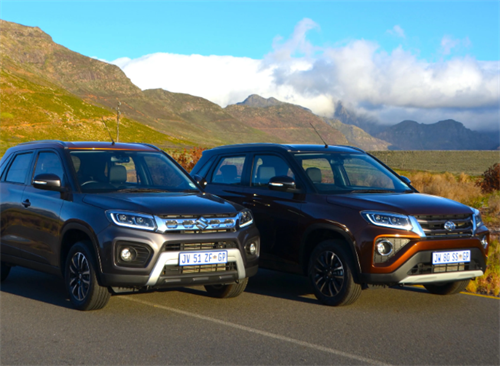
In developing countries, compact SUVs are often more than lifestyle vehiclesâthey are daily workhorses, tasked with navigating unpredictable road conditions, sustaining families, and enduring climate extremes that stress engines, suspension, and electronics alike. The Suzuki Brezza in India and the Toyota Urban Cruiser in Latin America exemplify these demands, offering an instructive case study in how small SUVs adapt â or struggle â to provide reliable mobility in challenging environments.
Compact SUV Adoption: Functionality Over Fashion
Small SUVs in India and Latin America are functional necessities rather than luxury toys. In India, the Brezza has grown rapidly in popularity due to its affordability, efficiency, and adaptability. The Vitara Brezza continues to rank among the top sellers in the compact SUV segment, outperforming rivals like the Tata Nexon in resale and long-term reliability perceptions (Cars24, 2025). Its popularity stems not just from brand loyalty but from a proven ability to handle varied road conditionsâfrom urban potholes to rural tracks.
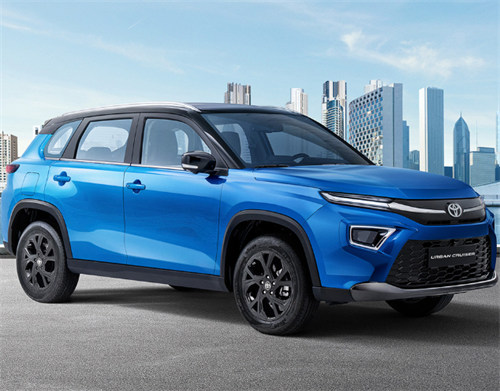
In Latin America, the Toyota Urban Cruiser, a rebadged sibling of the Brezza, occupies a similar functional niche. Although the regional usage pattern blends urban commuting with longer highway drives, the fundamental stressorsâunpredictable surfaces, high temperatures, and fuel variabilityâmirror those faced by Indian SUV owners. Both markets prioritize reliability, cost-effective maintenance, and predictable ownership economics over performance specs.
Engineering for Harsh Roads: Suspension and Chassis Insights
The Brezzaâs suspension system reflects the Indian context: a softer setup absorbs uneven surfaces and potholes effectively, minimizing driver fatigue over long commutes (Auto Hindustan Times, 2025). Real-world owner reports confirm that this approach significantly extends the lifespan of bushings and joints under daily stress. In contrast, the Toyota Urban Cruiserâs suspension is tuned slightly firmer to maintain high-speed stability on longer stretches common in Latin America while remaining compliant enough for urban irregularities (Cartea Wiki, 2025).
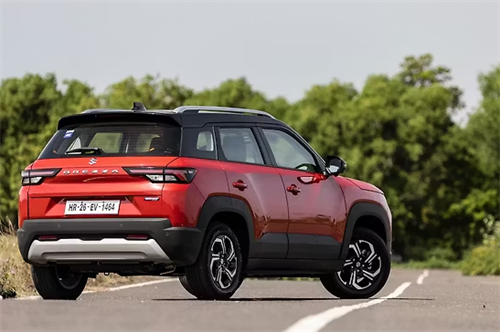
Minor differences in design and styling also reflect local priorities. The Brezza features a sportier front grille and chrome accents, while the Urban Cruiser adopts a more understated look with horizontal grille slats and a matte black bumper with silver accents (Lilleike, 2021). Though primarily aesthetic, these variations signal Toyotaâs focus on conservative durability and broad regional appeal.
Powertrain Realities: Engine Durability and Fuel Quality
Fuel quality and ambient temperatures significantly impact engine longevity in developing markets. The Brezzaâs naturally aspirated 1.5-liter petrol engine prioritizes simplicity over peak output, reducing maintenance complexity and vulnerability to low-octane or adulterated fuel (Auto Hindustan Times, 2025). Users frequently report minimal mechanical issues even after years of rural and urban use, underscoring Suzukiâs reliability philosophy.
The Toyota Urban Cruiser, mechanically similar but regionally adapted, emphasizes torque and thermal robustness to handle Latin Americaâs higher ambient temperatures and variable fuel conditions (Cartea Wiki, 2025). While both vehicles provide reliable performance, Toyotaâs calibration choices lean toward consistent drivability across diverse terrain rather than maximizing short-term efficiency.
Fuel efficiency is notable for both vehicles. The Brezza delivers 16â17 km/l in mixed driving, while the Urban Cruiser achieves similar efficiency without sacrificing drivability, ensuring lower running costs over extended ownership periods (CFAO Mobility Toyota, 2023). Both models balance economy with practical performance, critical for families relying on these vehicles for daily transport and occasional excursions.
Ownership Economics: Maintenance, Warranty, and Resale
Real ownership economics distinguish practical SUVs from aspirational ones. In India, the Brezzaâs scheduled maintenance costs over five years average around â¹25,800, complemented by a 5-year/200,000 km warranty and a 4-year/60,000 km service plan (Cars24, 2025; Lilleike, 2021). This combination minimizes downtime and unexpected repair costs, making it ideal for buyers outside major urban centers.
The Urban Cruiser in Latin America offers a 3-year/100,000 km warranty and a 3-service/45,000 km plan, which can be extended at purchase. While slightly higher in absolute service costs, Toyotaâs dealership network and brand trust provide confidence in long-term reliability (CFAO Mobility Toyota, 2023).
Pricing differences reflect brand positioning: the Brezza is generally marginally cheaper, with entry-level models priced at R269,900, while Urban Cruiser Xs models start at R329,400 (CFAO Mobility Toyota, 2023). Despite these differences, both vehicles exhibit strong resale values due to brand loyalty and low incidence of mechanical failures, with the Brezza retaining approximately 63â70% of value after three years (Cars24, 2025).
Safety and Structural Survivability
Both SUVs prioritize safety with multiple airbags, ABS, stability control, and rearview cameras (CFAO Mobility Toyota, 2023). NCAP ratings for the Brezza indicate strong adult occupant protection, while Toyota models benefit from rigorous global safety standards. Structural durability over time is also critical: owners report that repeated minor impacts from poor roads do not compromise chassis integrity, reflecting robust design choices (Car Blog India, 2023).
Practical Features: Comfort, Versatility, and Maneuverability
Versatility: Both SUVs cater to urban commuting and weekend adventures. The Brezza handles city traffic and rural tracks efficiently, while the Urban Cruiser adapts to diverse needs with a slightly higher emphasis on stability and torque for outdoor excursions (CFAO Mobility Toyota, 2023).
Maneuverability: Compact dimensions and responsive steering allow easy navigation of crowded streets. The Urban Cruiserâs agility is slightly superior in tight urban spaces, while the Brezza balances urban maneuvering with comfort over rough roads (Lilleike, 2021).
Off-Road Capability: Both vehicles are capable of mild off-road conditions, supported by higher ground clearance and traction control. Neither is intended for extreme off-roading, but they inspire confidence in mixed urban-rural scenarios.
Comfort: Both SUVs feature spacious cabins, adjustable seats, and infotainment systems with touchscreen, Bluetooth, and smartphone integration. Owners report that long drives remain comfortable, with minimal fatigue from suspension or seat ergonomics (CFAO Mobility Toyota, 2023).
Exterior Styling: The Brezza exhibits a sporty, aggressive stance with bold accents, while the Urban Cruiser carries Toyotaâs sleek and sophisticated aesthetic. Buyersâ preferences often dictate choice more than functional differences (Lilleike, 2021).
Long-Term Ownership Insights
High-mileage owners highlight the Brezzaâs low cost of ownership and reliability, with minimal breakdowns even after several years of mixed-use driving. The Urban Cruiser emphasizes predictable performance and Toyotaâs global reliability standards, though at slightly higher maintenance costs. Both vehicles demonstrate how thoughtful engineering and regional adaptation allow compact SUVs to thrive in developing markets.
The Suzuki Brezza and Toyota Urban Cruiser showcase different approaches to the same functional problem: providing reliable, versatile, and affordable mobility in developing countries. The Brezza prioritizes simplicity, low-cost maintenance, and comfort over rough roads, while the Urban Cruiser emphasizes predictable drivability, structured service plans, and brand trust. Both succeed in their respective contexts, proving that long-term reliability and cost-effectiveness are more valuable to buyers in these markets than flashy specs or top-end performance.
For buyers in India and Latin America, the choice ultimately depends on service accessibility, maintenance budget, styling preference, and daily use patterns.
References:
[1] Cars24. (2025). 10 SUVs with lowest maintenance costs in India. https://www.cars24.com/news/car-knowledge/10-suvs-with-lowest-maintenance-costs/
[2] Auto Hindustan Times. (2025). Maruti Suzuki Brezza user reviews: Reliability and low maintenance. https://auto.hindustantimes.com/new-cars/marutisuzuki/brezza/user-reviews/reliability-low-maintenance-69269e6f48d51d94ec31f76a
[3] Car Blog India. (2023). Toyota Urban Cruiser vs Maruti Brezza NCAP safety comparison. https://www.carblogindia.com/toyota-urban-cruiser-vs-maruti-brezza-ncap-safety-rating/
[4] Cartea Wiki. (2025). Urban Cruiser ownership cost and pricing guide. https://www.icartea.com/en/wiki/urban-cruiser-how-much-does-it-cost-in-comprehensive-guide
[5] Lilleike, G. (2021, March 31). Suzuki Vitara Brezza vs Toyota Urban Cruiser: Key Differences. AutoNews. https://www.autonews.com/suzuki-vitara-brezza-vs-toyota-urban-cruiser-key-differences
[6] CFAO Mobility Toyota. (2023, May 5). Toyota Urban Cruiser vs Suzuki Brezza: Specs and features comparison. https://www.cfaomobilitytoyota.com/urban-cruiser-vs-brezza
Recommended for you