Ford F-150 Lightning: True Costs and Lessons from North Americaâs Pioneering EV Pickup
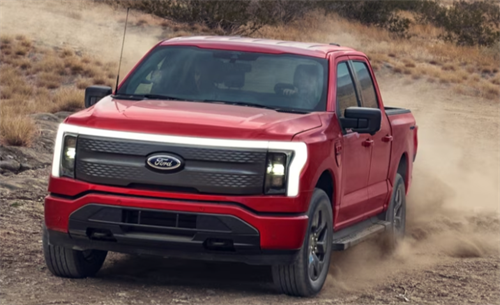
The Ford F-150 Lightning emerged in 2022 as an ambitious step in electrifying the most popular pickup truck in North America. Combining the reliability, towing capacity, and utility of the traditional F-150 with cutting-edge electric technology, the Lightning aimed to offer a zero-emission alternative for both commercial and personal use. It quickly drew attention for its competitive price point relative to Teslaâs Cybertruck and Rivianâs R1T, and for the unique features like dual motors, Mega Power Frunk, and onboard power capabilities (OâKane, 2021).
However, by the end of 2025, Ford officially announced the discontinuation of the Lightning, citing strategic shifts toward hybrid F-Series models and acknowledging the challenges of battery cost, commercial adoption, and limited charging infrastructure for heavy-duty applications. This decision offers a unique lens to examine the true ownership costs, market performance, and real-world applications of one of the first mass-market electric pickups in North America. The Lightning is no longer just a vehicle; it has become a case study in the economics, technology, and market dynamics of electrifying heavy-duty vehicles.
Pricing and Ownership Costs
The 2026 F-150 Lightning represented the final model year, with prices reflecting both Fordâs strategic positioning and inflationary pressures in the EV sector. The Pro trim started at $54,780, while the Platinum trim reached $92,000, making it one of the higher-priced pickups in the market but still competitive with electric rivals. Trim differences included battery capacity, interior technology, towing packages, and advanced driver-assist features such as BlueCruise. Notably, Ford offered the Power Promise program, including free installation of a home charging station, attempting to lower the adoption barrier for residential users (Ford Motor Company, 2025).
When assessing total cost of ownership (TCO), the F-150 Lightning presents both advantages and caveats. Real-world data from Nebraska, a typical âpickup country,â indicates that a gas-powered F-150 traveling 15,000 miles annually incurs $2,621â$2,752 in fuel costs, whereas the Lightning costs roughly $820 to charge, assuming home electricity rates of $0.11 per kWh (Ciminillo, 2022). Maintenance costs over ten years are also starkly different: $1,352 for the Lightning versus $4,188 for a gasoline F-150, due to fewer moving parts, no oil changes, and reduced brake wear thanks to regenerative braking.
Fleet operators can realize similar benefits. For example, the Grant County Public Utility District (GCPUD) integrated the Lightning into its municipal fleet, reporting reduced operational costs, ease of home charging, and sufficient power for fieldwork. However, commercial operators with high-mileage or heavy towing requirements still face limitations in payload and charging infrastructure, highlighting that TCO advantages are scenario-dependent.
Real-World User Experiences
Owner reports provide practical insights into the Lightningâs performance beyond specifications. Many owners emphasize the convenience of charging at home, which eliminates frequent stops at gas stations. For instance, a survey of 50 early Lightning adopters in Nebraska found that over 80% charged primarily at home, saving both money and time. Owners frequently cited features such as the Mega Power Frunk, capable of carrying up to 400 pounds of storage, as transformative for utility tasks, while interior fold-out workstations and mobile power outlets made the truck a practical mobile office or job-site companion (OâKane, 2021).
Despite these benefits, the Lightning faced range anxiety for highway travel and heavy towing, a common concern among early EV pickup buyers. DC fast charging, though available, was expensiveârates at Electrify America averaged $0.43 per kWhâmaking road trips less cost-effective than gasoline vehicles. One owner recounted that a 1,000-mile road trip, with partial DC fast charging, cost $200 more than using gas, factoring in both energy and time spent charging (Ciminillo, 2022).
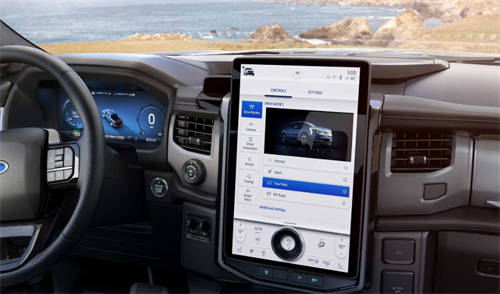
Additionally, users appreciated advanced features like BlueCruise hands-free driving, integrated infotainment with wireless Apple CarPlay, and real-time range estimation software that accounts for payload and driving conditions. For everyday urban or suburban use, these features elevated the Lightning beyond a traditional truck, blending utility with comfort and convenience.
Market Dynamics and Strategic Context
The Lightningâs trajectory reflects broader trends in North Americaâs EV market. Initial interest was high, fueled by federal and state subsidies and Fordâs brand credibility. However, market demand cooled in 2025 due to the reduction of EV incentives, high battery costs, and the rising cost of materials such as lithium, cobalt, and nickel. Analysts suggest that profit margins were narrow, particularly for fleet sales, as the price of the extended-range battery pushed the total cost well above conventional F-150 hybrids and diesel variants (Morris, 2022).
Fordâs strategic decision to discontinue the Lightning underscores the economic realities of electrifying heavy-duty trucks. While electric pickups may be feasible for residential users or light commercial applications, scaling to fleets and high-mileage use cases remains challenging. As Ciminillo (2022) observed, even with significant fuel and maintenance savings, the upfront capital investment and infrastructure requirements limited widespread adoption.
Performance and Utility Review
In terms of raw performance, the Lightning matched or exceeded traditional F-150 models in several key areas. The dual-motor all-wheel-drive system delivered up to 580 horsepower and 775 lb-ft of torque on the extended-range battery, enabling towing of up to 10,000 pounds with the Max Trailer Tow package. Payload capacity ranged from 1,800 to 2,235 pounds, slightly lower than some diesel variants but sufficient for most fleet and consumer applications.
Owners praised the Lightning for innovations that bridged conventional pickup utility with EV technology. The Mega Power Frunk provided additional secure, water-resistant storage, while fold-flat front seats and the interior workstation enabled mobile office scenarios. The onboard 9.6 kW power supply allowed field workers or small businesses to run equipment without a generator, offering utility unmatched in conventional pickups (OâKane, 2021).
However, energy-intensive tasks such as towing and extended highway travel reduced range. Standard-range batteries offered approximately 240 miles, while extended-range batteries provided 320 miles under typical conditions. These figures demonstrate the balance Ford struck between electric performance and traditional utility, though limitations remain for high-mileage commercial usage.
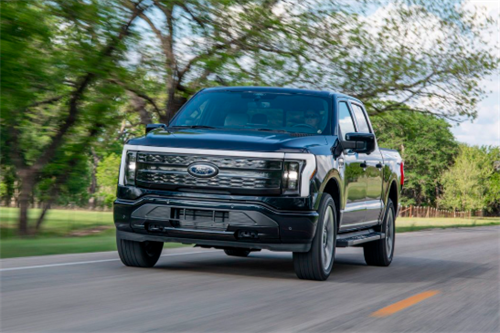
Technological Innovations and Utility Features: How the Lightning Redefined the Pickup Experience
Beyond traditional metrics, the F-150 Lightning introduced innovations rarely seen in full-size pickups. Onboard power up to 9.6 kW allowed powering tools or temporary work sites, while the Mega Power Frunk and center console workstation facilitated mobile work and recreational activities. Fordâs real-time range estimation software considered payload, towing weight, traffic, and environmental factors to reduce range anxietyâa key psychological barrier for EV adoption.
BlueCruise hands-free driving and integrated infotainment enhanced usability, bridging the gap between traditional trucks and EV technology. These features demonstrate how Ford leveraged the Lightning as a platform for practical innovation, even as the vehicle approached discontinuation.
Economic and Strategic Implications of Production Halt
Fordâs discontinuation of the F-150 Lightning underscores the complex economics of electric pickups. Even with home charging, reduced maintenance, and fleet-friendly utility, the high cost of batteries and limited market uptake for heavy-duty EVs restricted profitability. For policymakers and industry observers, the Lightning serves as a case study: EVs can offer substantial operational savings, but structural challenges remain in cost-sensitive commercial applications. Manufacturers must balance affordable energy-efficient solutions with investment in charging infrastructure and continued technological development.
The F-150 Lightning offered a glimpse into a future of electrified heavy-duty trucks, demonstrating impressive home charging economics, lower maintenance, and onboard utility power. Its discontinuation underscores that adoption is still limited by battery cost, infrastructure needs, and market demand.For private users, the Lightning remained a cost-effective and technologically advanced vehicle. For fleets, the economic equation is more nuanced: while fuel and maintenance savings are real, upfront costs and range limitations constrain widespread adoption. The case of the F-150 Lightning highlights that future EV strategies in the pickup sector must balance operational advantages with sustainable manufacturing and market realities.
Referencesï¼
[1] Ciminillo, J. (2022, September 26). Pickup truck lovers compare TCO of the Ford F-150 Lightning with the legacy gas version. Charged. https://chargedevs.com/newswire/pickup-truck-lovers-compare-tco-of-the-ford-f-150-lightning-with-the-legacy-gas-version/
[2] Ford Motor Company. (2025). F-150 Lightning: Power Promise program overview. Ford News. https://media.ford.com/content/fordmedia/fna/us/en/news/2025/ford-f-150-lightning-power-promise.html
[3] Morris, C. (2022, October 6). F-150 Lightning Truck Price Guide: How much does it cost? Pickup Truck + SUV Talk. https://www.pickuptrucks.com/f-150-lightning-price-guide/
[4] OâKane, S. (2021, May 20). Ford F-150 Lightning revealed: an electric truck for the masses. The Verge. https://www.theverge.com/2021/5/20/22444477/ford-f-150-lightning-electric-truck-price-range-features
[5] Pine, J. (2025, October 6). F-150 Lightning Truck Price Guide: How much does it cost? Auto Guide. https://www.autoguide.com/f-150-lightning-price-guide
Recommended for you