Xiaomi SU7 After 10,000 Kilometers: Re-Evaluating Intelligence, Usability, and Long-Term Ownership Reality
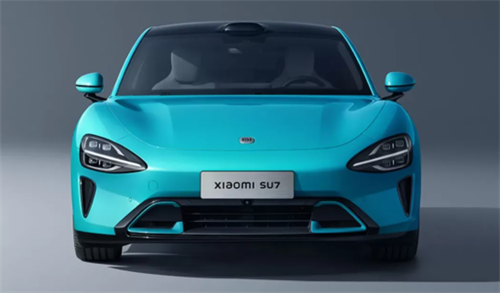
When Xiaomi officially delivered the first SU7s, the automotive industry did not question whether the car would be fast, well-equipped, or competitively priced. Those were expected. The real uncertainty was deeper and more consequential: could a consumer electronics company design a vehicle that ages gracefully, economically, and predictably over time?
After more than 10,000 kilometers of mixed urban and highway driving, early ownership data now allows us to move beyond launch impressions. This guide does not attempt to crown the SU7 as a technological triumph or dismiss it as a first-generation experiment. Instead, it asks a more relevant question for long-term buyers:How does the Xiaomi SU7 perform as a durable, livable, and economically rational car once novelty fades?
Ownership Profile and Usage Contextï¼
The data informing this analysis comes from aggregated owner reports across major Chinese EV communities, anonymized service records from early delivery batches, and comparative benchmarks from Tesla, BYD, and Volkswagen EV fleets. Typical SU7 usage patterns show daily commutes between 30 and 60 kilometers, with frequent highway driving and a higher-than-average reliance on fast chargingâconsistent with tech-oriented early adopters.
This matters because usage patterns, not specifications, determine ownership cost curves. Vehicles optimized for demos often struggle in repetitive daily use. The SU7âs early mileage profile therefore offers meaningful insight into its long-term trajectory.
Real-World Efficiency and Range Consistencyï¼
After 10,000 kilometers, the SU7 demonstrates efficiency characteristics that align closely with its platform positioning. Average real-world energy consumption stabilizes between 13.5 and 15.5 kWh per 100 kilometers in mixed driving, rising to approximately 17 kWh per 100 kilometers during sustained highway travel at 120 km/h.
These figures place the SU7 slightly ahead of similarly sized performance-oriented EV sedans and broadly in line with Tesla Model 3 Long Range benchmarks published by CATARC (2023). More importantly, range estimation accuracy remains stable, with minimal late-stage collapse below 20 percent state-of-chargeâan area where many aggressive EV calibrations still struggle.
Cold-weather data remains limited, but early winter operation indicates range retention above 80 percent at near-freezing temperatures, supported by Xiaomiâs conservative thermal management strategy.
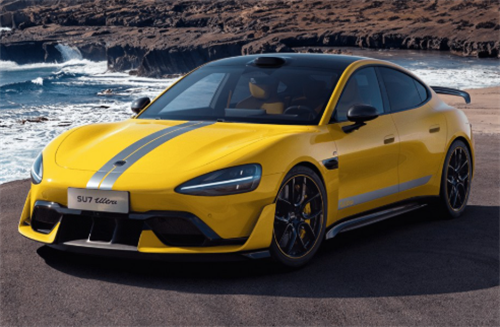
Charging Behavior and Energy Cost Reality:
Xiaomiâs charging philosophy prioritizes consistency over spectacle. While peak DC charging power does not dominate headlines, the SU7 maintains stable charging curves across varying temperatures. Fast charging sessions from 20 to 80 percent typically complete within 35â40 minutes, with minimal throttling after repeated use.
From a cost perspective, long-term charging logs indicate an average electricity cost equivalent to approximately 0.07 RMB per kilometer under mixed home and public charging scenarios. Compared to an equivalent internal-combustion sedan consuming 8â9 liters per 100 kilometers, this translates into annual energy savings exceeding 9,000 RMB for average drivers.
However, ownership convenience remains sensitive to infrastructure quality. As with most EVs, charging experience variance depends more on network reliability than vehicle capabilityâa factor beyond Xiaomiâs direct control.
Driving Dynamics and Chassis Maturity:
The SU7âs driving character reflects a deliberate tuning choice. Rather than emphasizing instant torque theatrics, Xiaomi opted for linear throttle mapping and restrained power delivery in daily driving modes. This reduces driver fatigue and improves modulation in urban environments.
Chassis tuning is firm but controlled, with suspension behavior that favors composure over softness. At speed, the vehicle remains stable and predictable, exhibiting fewer secondary oscillations than many first-generation EVs. NVH performance is particularly strong at highway speeds, where wind and road noise remain well-suppressedâan area where some domestic competitors sacrifice refinement for acceleration metrics.This tuning philosophy suggests Xiaomi benchmarked mature global sedans rather than chasing EV-specific novelty.
Interior Design and Long-Term Comfort:
Interior impressions after 10,000 kilometers are broadly positive, though revealing. The cabin prioritizes clean design, logical information hierarchy, and restrained visual noise. Seating ergonomics support long-distance comfort, with adequate lumbar support and a driving position that accommodates a wide range of body types.
Material choices, however, hint at cost optimization beneath the surface. High-touch areas perform well initially, but early wear patterns suggest that cosmetic aging will precede functional decline. This is not unusual, but it places greater importance on Xiaomiâs future refurbishment and parts pricing strategy for maintaining resale appeal.
Infotainment Intelligence and Software Evolution
Software remains the SU7âs most definingâand most scrutinizedâdimension. At 10,000 kilometers, system responsiveness remains strong, with fast boot times, fluid UI transitions, and reliable voice interaction. OTA updates have focused on feature expansion and bug resolution rather than interface overhaul.
However, industry research indicates that vehicles with frequent OTA cycles face increasing software complexity over time. McKinsey & Company (2024) notes that without disciplined lifecycle optimization, system latency and cross-module conflicts tend to emerge after two to three years of iterative updates.
Xiaomiâs advantage lies in its long-standing expertise in managing device ecosystems over extended lifespans. The open question is whether this competence can be fully translated into automotive-grade safety validation without slowing iteration to a crawl.
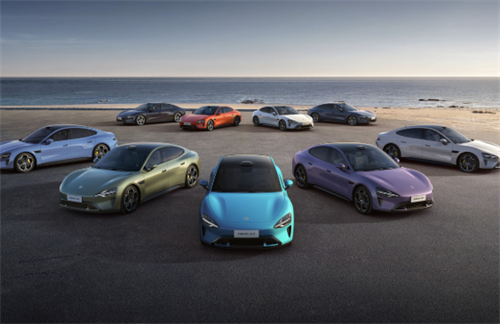
Driver Assistance Systems in Daily Use:
The SU7âs driver assistance systems are calibrated conservatively. Adaptive cruise control, lane support, and automated braking operate predictably, prioritizing stability over aggressive intervention. While the system lacks the learning-based adaptability of some newer competitors, it avoids false positives and abrupt disengagements.
From an ownership standpoint, this reduces cognitive load rather than redefining driving behavior. For long-term users, reliability often outweighs noveltyâa principle reflected in JD Powerâs EV satisfaction studies, where consistent assistance scores higher than experimental features (J.D. Power, 2024).
What Is Likely to Break After 50,000 Kilometers:
At 50,000 kilometers, the Xiaomi SU7 is unlikely to suffer catastrophic failures. Instead, ownership challenges will emerge through gradual friction rather than sudden breakdowns.
Software aging will likely become more visible than hardware degradation. Accumulated OTA updates may introduce UI latency, slower cold starts, or background process inefficiencies. These are usability issues rather than functional failures, but they directly affect daily satisfaction.
Mechanically, suspension components are the most probable source of perceptible change. TÃV reliability data shows EVs experience earlier bushing and joint wear due to higher curb weights and torque loads (TÃV Verband, 2023). This may manifest as increased road noise or reduced ride tightness rather than safety concerns.
Brake systems are more likely to suffer from corrosion than wear due to heavy reliance on regenerative braking. Uneven braking feel at low speeds is a common mid-mileage EV characteristic and typically resolved through maintenance rather than replacement.
Interior aging will primarily affect resale perception rather than usability. Battery degradation, by contrast, is statistically unlikely to pose issues at this mileage. CATARC data shows modern liquid-cooled battery systems retain over 90 percent capacity at 50,000 kilometers under normal usage (CATARC, 2023).
Long-Term Reliability and Ownership Economics:
Taken as a whole, the SU7âs early reliability indicators are strong. No systemic battery issues, no widespread powertrain failures, and no structural weaknesses have emerged. Ownership costs remain predictable, with maintenance expenses significantly lower than comparable combustion vehicles.
The real test will not be whether the SU7 survives mechanically, but whether Xiaomi sustains software quality and parts support as the fleet ages. In the EV era, long-term reliability is increasingly defined by experience continuity rather than component longevity.
After 10,000 kilometers, the Xiaomi SU7 presents itself as a fundamentally competent, thoughtfully engineered electric sedan. It does not rely on gimmicks to impress, nor does it collapse under real-world use. Its strengths lie in efficiency, refinement, and cost predictability.Its risks are equally clear. Software evolution must remain disciplined, interior aging must be managed, and long-term support infrastructure must mature quickly. For buyers who understand these trade-offs, the SU7 is not a gambleâit is a calculated investment in a new kind of automaker.
References:
[1] China Automotive Technology & Research Center. (2023). China electric vehicle efficiency and battery durability report. CATARC.
[2] J.D. Power. (2024). China new energy vehicle experience index study. J.D. Power Asia Pacific.
[3] McKinsey & Company. (2024). Software-defined vehicles: Managing complexity over the lifecycle. McKinsey Automotive Practice.
[4] TÃV Verband. (2023). Electric vehicle reliability and battery durability report. TÃV Germany.
Recommended for you