Long-term Report on Audi e-tron GT: How Astonishingly Fast Are the Tire and Brake Wear Rates of the High-Performance Electric Coupe?
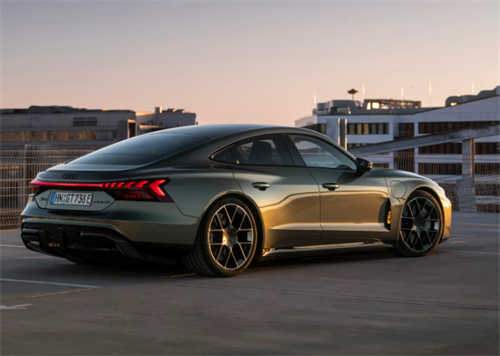
For decades, performance-car ownership has carried an unspoken understanding: speed costs money, and consumables are the quiet tax that comes with it. What has changed with high-performance electric vehicles like the Audi e-tron GT is not merely the rate at which tires and brakes wear, but the scale and predictability of that wear under everyday use. This is no longer a story confined to track days or aggressive driving styles. Instead, it plays out gradually over commuting miles, winter road trips, and motorway cruisingâoften catching owners off guard precisely because EVs are marketed as mechanically simpler and cheaper to maintain.
The Audi e-tron GT sits at a particularly interesting intersection. It shares core hardware with the Porsche Taycan, yet it is positioned as a grand tourer rather than a pure performance sedan. That positioning creates a unique expectation gap: owners anticipate comfort, refinement, and usability, while the physics of a 2.3-tonne, 500-plus-horsepower electric coupe quietly impose their own costs. Tire and brake wear become the clearest evidence of that tension between promise and reality.
Long-term ownership data, enthusiast reports, and six-month test experiences consistently show that wear rates on the e-tron GT are not abnormal by performance standardsâbut they are astonishingly fast by luxury-car expectations.
The Audi e-tron GTâs Weight, Torque, and the Physics Working Against Its Tires
The most important factor influencing tire wear on the e-tron GT is not aggressive driving, nor poor alignment, nor even tire compound choice in isolation. It is mass combined with instantaneous torque delivery. At over 2,300 kilograms before passengers, the e-tron GT places sustained vertical load on its tires even when driven gently. Unlike an internal-combustion GT car, there is no gradual torque ramp as revs build; the electric motors deliver peak force immediately and repeatedly, including during low-speed maneuvers that owners rarely associate with wear.
Over six months of mixed drivingâurban errands, motorway journeys, and winter road tripsâlong-term testers have reported visible rear tire degradation well before the mileage at which comparable ICE luxury coupes would show concern. This aligns closely with owner reports from forums and service advisors, who note that rear tires can show uneven shoulder wear as early as 10,000 to 15,000 miles, depending on driving conditions and alignment tolerances.
What makes this wear feel âastonishingâ is not that it happens, but that it happens without drama. There is no wheelspin, no tire smoke, no sense of abuse. The car feels composed and refined while quietly consuming tread depth. This is a recurring theme in high-performance EV ownership and one that the e-tron GT exemplifies particularly well.
Tire Specification Choices and Their Long-Term Consequences:
Factory Tire Strategy: Efficiency Versus Longevity
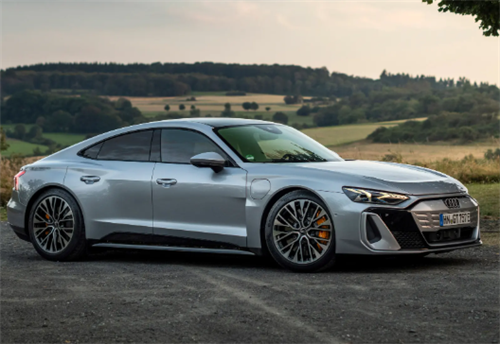
Audiâs decision to fit the e-tron GT with efficiency-oriented Pirelli tires rather than outright performance rubber is often misunderstood. On paper, this choice supports range targets and everyday refinement. In practice, it introduces a trade-off that becomes evident over time. These tires are designed to balance rolling resistance, noise suppression, and wet-weather security rather than withstand repeated high-load cycles from a heavy EV chassis.
Long-term track observations reinforce this point. At EV-only track events, owners have reported that front tiresâparticularly the left front on clockwise circuitsâcan overheat and degrade rapidly, sometimes within a single session. While most owners will never take their e-tron GT to a circuit, this extreme example highlights how quickly these tires reach their thermal and structural limits under load.
On the road, the result is accelerated but subtle wear. The tires rarely feel overwhelmed; they simply age faster than owners anticipate. Replacements are neither cheap nor optional, as Audi-approved tire specifications limit alternatives for those wishing to preserve handling balance and warranty peace of mind.
Alignment Sensitivity and Everyday Driving:
Another contributor to tire wear lies in alignment sensitivity. The e-tron GTâs suspension geometry is optimized for stability at speed and precise turn-in, but this leaves little margin for misalignment caused by potholes, speed humps, or uneven loading. Owners frequently report that minor knocksâimperceptible from the driverâs seatâcan lead to measurable changes in wear patterns over time.
This sensitivity is amplified by the carâs low ride height. Even cautious drivers encounter regular underbody contact on speed humps, particularly in efficiency or low suspension modes. While this does not directly damage tires, it underscores how tightly packaged the chassis is, and how easily real-world conditions can nudge it away from ideal setup.
Brake Wear in an EV That Rarely Uses Its Brakes:
At first glance, brake wear should be a non-issue for an electric vehicle equipped with strong regenerative braking. The Audi e-tron GT reinforces this assumption by offering multiple regeneration modes and the ability to recapture substantial energy under deceleration. In everyday driving, friction brakes are often used less frequently than in comparable ICE vehicles.
Yet long-term data reveals a more nuanced reality. While pad wear is indeed slower under gentle use, brake components on the e-tron GT face different stressors rather than fewer ones. High curb weight means that when the brakes are engagedâhard stops from motorway speeds, downhill descents with a full battery, or emergency brakingâthe forces involved are immense. Over time, this leads to glazing, uneven wear, and in some cases premature rotor replacement.
Track-day experiences provide a magnified illustration. Even short sessions generate intense brake heat, with multiple reports of acrid brake odor and accelerated wear after limited laps. This does not imply poor brake design; rather, it highlights how EV mass fundamentally alters brake duty cycles. The optional carbon-ceramic setup mitigates some issues but introduces its own cost considerations, making it impractical for most owners.
Seasonal Effects: Cold Weather, Range Loss, and Their Indirect Impact on Wear
Cold weather introduces a cascading effect on wear that many owners do not initially connect. Reduced efficiencyâoften dropping from around 2.5 miles per kWh to closer to 2.0 in winterâforces drivers to charge more frequently and manage energy more conservatively. This subtly alters driving behavior, increasing reliance on friction braking as regenerative performance changes with temperature and battery state.
Winter road conditions also accelerate wear indirectly. Cold tires struggle to reach optimal operating temperature, increasing micro-slip during acceleration and cornering. Over thousands of miles, this contributes to faster tread degradation, particularly on low-profile tires already operating near their design limits.
Long-term testers consistently note that winter months represent the steepest decline in both perceived range and consumable condition, even when mileage accumulation remains modest. This reinforces the importance of viewing tire and brake wear as a systemic outcome, not a single-factor problem.
Everyday Usability Versus Wear: The Grand Touring Paradox
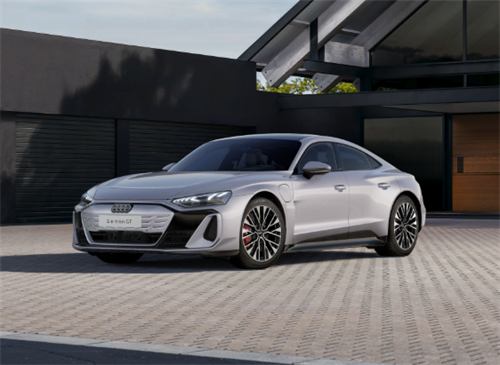
One of the most compelling aspects of the e-tron GT is how effortlessly it performs as a daily car. Long journeys feel short, motorway refinement is exceptional, and the car rarely feels stressed. Ironically, this very competence encourages frequent use, which in turn accelerates wear accumulation.
Over six months and roughly 3,000 miles of mixed use, long-term testers observed cosmetic wear such as stone chips and minor wheel damageâparticularly on rear alloysâalongside early signs of tire aging. None of this detracted from the driving experience, yet it quietly contributed to future maintenance costs.
This paradox defines high-performance EV ownership. The car feels easy to live with, so it gets used more often. That usage, combined with EV-specific physics, compresses consumable lifespans into shorter intervals than many luxury buyers anticipate.
Cost Implications: When Tire and Brake Wear Redefine Ownership Economics
From a financial perspective, tire and brake wear represent a disproportionate share of non-energy operating costs for the e-tron GT. Replacement tires alone can exceed several thousand dollars over a typical ownership cycle, particularly if replacements occur sooner than expected. Brake servicing, while less frequent, carries higher per-event costs due to component size and labor complexity.
These expenses compound against a backdrop of rapid depreciation, which multiple industry sources identify as a defining characteristic of luxury EVs. According to Edmunds and Kelley Blue Book data, depreciation can exceed $60,000 over five years for vehicles in this class, meaning consumable costs arrive on top of already significant value loss (Edmunds, 2025; Kelley Blue Book, 2025).
For owners who lease or participate in salary-sacrifice schemes, these costs may feel abstract. For private buyers planning long-term ownership, they form a critical part of the total cost equation.
Owner Strategies to Manage Wear Without Diluting the Experience
Experienced owners adopt subtle strategies rather than drastic compromises. Regular alignment checks, conservative winter driving habits, and thoughtful tire selection within Audi-approved parameters can meaningfully extend consumable life. Some owners accept faster wear as the price of entry, while others choose certified pre-owned vehicles to absorb early depreciation before facing maintenance realities.
What stands out across long-term reports is that dissatisfaction rarely stems from the costs themselves. Instead, it arises when those costs arrive unexpectedly. Owners who enter e-tron GT ownership informed about wear dynamics tend to remain enthusiastic advocates of the car.
The Audi e-tron GT is not flawed because it wears tires and brakes quickly. It is honestâperhaps unintentionallyâabout the realities of high-performance electric motoring. Its astonishing wear rates are not signs of poor engineering but reflections of physics, ambition, and the limits of current EV architecture.
For enthusiasts who value refinement, performance, and daily usability in equal measure, the e-tron GT remains one of the most compelling electric grand tourers available. But it rewards informed ownership. Understanding how and why consumables wear allows owners to budget realistically, drive confidently, and appreciate the car for what it truly is: a luxury GT that happens to be electric, rather than an EV that happens to be cheap to run.
References:
[1]Edmunds. (2025). 2025 Audi e-tron GT: True cost to own. Edmunds Automotive Research.
[2]Kelley Blue Book. (2025). Audi e-tron GT depreciation and ownership costs. Kelley Blue Book.
[3]Car and Driver. (2025). 2025 Audi RS e-tron GT performance test and long-term observations. Car and Driver Magazine.
[4]Audi AG. (2024). Audi e-tron GT technical specifications and battery warranty documentation. Audi Official Publications.
[5]Marriage, O. (2021). Audi e-tron GT quattro long-term review. Autocar.
Recommended for you