Sunroof Reliability Across Major Car Brands: Leak Risk, Noise Issues, and Long-Term Maintenance Costs
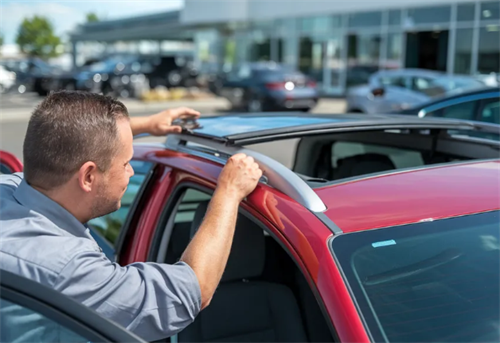
Sunroofs have become one of the most visible symbols of modern car âpremiumization.â What was once a luxury option is now standard equipment on many compact and mid-size vehicles, especially in the form of large panoramic glass roofs. According to industry market research, panoramic sunroofs now account for over 60% of new passenger vehicle installations globally, driven by consumer preference for light-filled cabins and perceived value upgrades.
However, from a long-term ownership perspective, sunroofs remain one of the highest-risk body systems once vehicles age beyond their warranty period. Unlike engines or suspensionsâwhere failure modes are well understoodâsunroof problems often develop gradually and invisibly, eventually manifesting as water leaks, persistent abnormal noises, or expensive structural repairs.
Why Sunroofs Carry Structural and Ownership Risk
1. A system designed to manage water, not eliminate it
A fundamental technical reality is often overlooked by consumers: most automotive sunroofs are not sealed to be absolutely waterproof. Instead, they rely on a controlled water management strategy. Rainwater that passes the outer sealing interface is collected in a cassette tray and routed away through drainage channels embedded in the roof structure.
This design is not a flawâit is an industry standard adopted to allow smooth movement of glass panels under thermal expansion. However, it means that sunroof reliability depends on multiple passive components working simultaneously: sealing strips, drainage holes, flexible pipes, guide rails, and mounting frames.
As vehicles age, these components degrade at different rates. Rubber seals harden, drains clog, and metal guide rails experience micro-wear. The systemâs tolerance for neglect is therefore much lower than that of fixed body panels.
2. Why sunroofs age faster than doors or windows
Sunroofs occupy the most exposed area of the vehicle. They are subjected to direct ultraviolet radiation, extreme temperature cycling, airborne dust, pollen, and moisture. Academic durability testing shows that roof-mounted rubber components lose elasticity significantly faster than side-window seals under identical climatic conditions.
Paradoxically, sunroofs are often used infrequently. Extended periods of non-operation accelerate lubricant drying and seal adhesion, increasing friction and noise when the mechanism is eventually actuated.
Leakage Probability: Engineering Failure Modes Behind the Symptoms
1. Three dominant leakage modes identified by engineering research
Recent engineering studies (2024) analyzing sunroof water ingress mechanisms classify leakage into three primary modes, providing a more rigorous framework than generic âseal failureâ explanations.
The first mode occurs between the body sealing strip and the roof opening, typically caused by long-term seal compression set or body deformation. This is more common in vehicles with larger roof cutouts, such as panoramic designs.
The second mode arises between the glass panel and its perimeter sealing strip. Aging rubber loses elasticity, reducing contact pressure against the glass under dynamic conditions such as car washes or high-speed rain impact.
The third and most common mode is overflow from drainage channels. When drain holes or pipes are partially blocked, water accumulates in the cassette tray until it spills into the headliner or A-pillar cavities. This mode explains why leaks often appear suddenly after heavy rain, even if seals appear intact.
Understanding these modes clarifies why simply âreplacing sealsâ often fails to permanently solve leakage complaints.
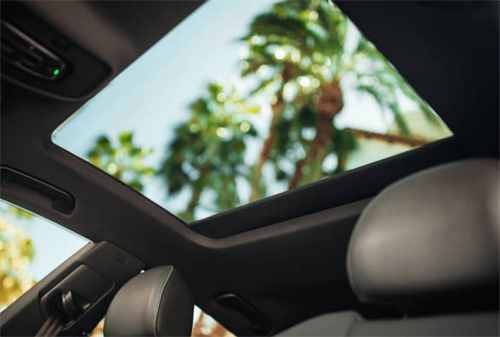
2. Design differences that influence real-world leak risk
German brands typically favor large panoramic sunroof systems, often supplied by global Tier-1 manufacturers such as Webasto or Inalfa. These systems offer excellent initial fit and finish but rely on complex drainage routing and precise installation. Owner complaint data indicates that leakage risk increases noticeably after five to seven years, especially in vehicles parked outdoors.
Japanese manufacturers generally adopt more conservative sunroof designs, with smaller openings and simpler drainage paths. While less visually striking, these systems demonstrate lower long-term leakage rates in Consumer Reports and warranty-extension datasets.
It is important to note that brands may share the same base module from a supplier, but differences in sealing materials, drainage pipe diameter, and routing angles can lead to materially different outcomes over time.
Abnormal Noise: More Than Just Aging Seals
1. Mechanical sources of sunroof noise
While seal friction is a common cause of squeaks, abnormal sunroof noise frequently originates from mechanical movement within the system. Guide rails, lifting arms, and tilt mechanisms operate under tight tolerances. As wear accumulates or lubrication degrades, micro-movements generate clicking, creaking, or rattling sounds.
Engineering teardown analyses show that even minor tolerance changesâcaused by wear or temperature-induced deformationâcan amplify noise due to the rigid glass panel acting as a resonator.
2. Why panoramic sunroofs face higher long-term noise risk
Panoramic sunroofs span a larger section of the roof, requiring longer rails and larger structural frames. This makes them more sensitive to body flex, especially on uneven roads. Over time, repeated torsional loads can induce slight misalignment, leading to intermittent noises that are difficult to diagnose.
This explains why panoramic systems often pass early quality inspections but develop noise complaints several years into ownership, particularly in regions with rough road surfaces.
Maintenance and Repair Costs Across the Vehicle Life Cycle
1. The hidden cost structure of sunroof ownership
Industry cost analysis indicates that sunroof systems can represent 3â5% of the retail price of small cars, reflecting their complexity and supplier cost. While these costs are embedded at purchase, they reappear later as repair expenses.
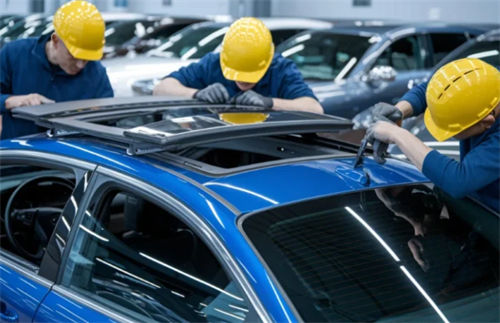
Post-warranty repairs involving water leaks typically range from $800 to $1,500, largely due to labor-intensive interior disassembly. Panoramic sunroof motor or cassette replacement can exceed $2,500, with limited aftermarket alternatives.
Unlike drivetrain repairs, sunroof failures often cascadeâwater intrusion can damage airbags, wiring harnesses, and control modules, significantly increasing total repair cost.
2. Preventive maintenance as the highest return investment
Preventive maintenance offers the greatest cost-benefit ratio. Quarterly cleaning of guide rails and drainage holes, combined with dedicated track lubricants and rubber protectants, can substantially delay seal hardening and drain blockage.
Service data from independent workshops shows that vehicles receiving regular sunroof-specific maintenance experience significantly fewer major repairs over a ten-year ownership period.
Environmental Factors That Accelerate Failure
1. Localized environmental risks
Beyond general climate, micro-environmental factors play a critical role. Long-term parking under trees increases the likelihood of leaves, seeds, and berries clogging drain holes. In industrial or coastal regions, airborne chemicals and salt accelerate rubber aging and mild corrosion of metal guides.
These factors help explain why identical models in different locations exhibit vastly different sunroof outcomes.
Used-Car Evaluation: Identifying Hidden Sunroof Risk
1. Warning signs beyond visible leaks
Water stains, headliner deformation, or musty odors suggest past leakage even if currently dry. Sluggish operation or inconsistent tilt motion indicates mechanical wear.
Buyers should inspect drainage outlets and test the sunroof multiple times, ideally after a car wash.
2. Interpreting prior repairs
Early documented repairs may indicate responsible ownership, but repeated interventions or full cassette replacement often signal chronic stress from design or environment.
Sunroofs are neither inherently unreliable nor maintenance-free. They are predictable systems with known failure modes, influenced by design complexity, environment, and owner behavior.
For garage-kept vehicles with routine maintenance, sunroofs can remain functional for years. For outdoor-parked cars in harsh environments, simpler designsâor no sunroof at allâmay reduce long-term cost and risk.Ultimately, informed ownership, not brand image, determines whether a sunroof remains a pleasure or becomes a liability.
References:
[1] Consumer Reports. (2023). Car reliability survey: Problem areas by vehicle system. Consumer Reports Publishing.
[2] J.D. Power. (2024). U.S. Vehicle Dependability Study (VDS). J.D. Power & Associates.
[3] SAE International. (2024). Failure modes and durability analysis of automotive sunroof sealing and drainage systems. SAE Technical Paper Series.
[4] Webasto Group. (2023). Panoramic roof systems: Design architecture, drainage strategy, and lifecycle durability. Webasto Technical White Paper.
[5] IHS Markit. (2024). Global automotive sunroof market trends and cost structure analysis. S&P Global Mobility.
Recommended for you