Mercedes Benz-EQB Long Test: After Three Years as the Only Family EV How Much Luxury Does It Really Deliver?
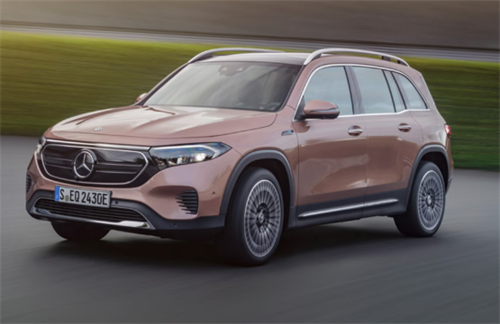
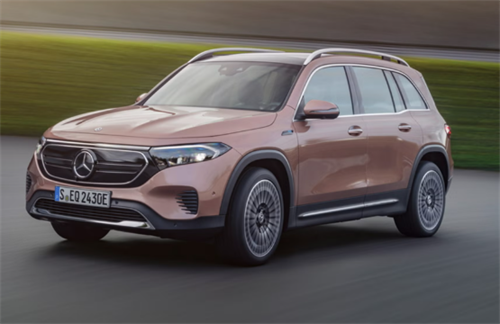
Among luxury EVs, the Mercedes-Benz EQB entered the market promising premium refinement in a compact electric SUV package with optional third-row seating and real-world usability. But three years into ownership, the true measure is not showroom headlinesâitâs how the EQB performs in everyday life, costs to keep, and satisfies long-term owners.
What the EQB Promises vs. What It Costsï¼
Mercedes-Benz positions the EQB as a compact, family-friendly EV with luxury appointments and flexible Toyota-like practicality. At launch, Chinese pricing for the 2025 EQB 260 and EQB 350 4MATIC ranged from roughly $49,000 to $61,000 USD, depending on trim and optional packages, while aggressive promotions in some markets briefly offered used-like pricing near $25,500 USD on select units (ZOL Auto data; Sina Auto, 2024). These variations illustrate how market incentives, dealer discounts, and inventory pressures can drastically reshape consumer costs in real time.
According to Kelley Blue Book, the 5-year total cost to own a 2025 EQB is approximately $76,915 USD, including depreciation of about $30,744 USD and operating costs (energy, insurance, service) around $46,171 USD over five years. This places the EQB in the mid-range of luxury compact SUV ownership costs, reflecting both premium service and the inherent expenses of maintaining a luxury EV platform (Kelley Blue Book, 2025).
Despite energy savings offered by electric drivetrains, depreciation remains a challenge for premium EVs, as rapid battery technology changes and shifting incentives depress resale values more than for comparable gasoline SUVs.
Real-World Reliability and Long-Term Durabilityï¼
After three years, the EQBâs mechanical fundamentalsâelectric motors, power electronics, chassis, and brakesâgenerally demonstrate solid durability. Independent owner surveys from Consumer Reports show that while the EQBâs overall reliability is still developing and reflects a recall history, the electric drivetrain itself remains resilient with few major mechanical failures, aligning with general trends for EVs in this class (Consumer Reports, 2025).
However, real-world feedback from discussions and owner experiences highlights that software-related issuesâinfotainment glitches, driver-assist recalibrations, connectivity concernsâare among the most common service events encountered over longer ownership periods. This is consistent with broader EV ownership patterns, where electronics and software complexity often disguise themselves as reliability concerns even when the core mechanical systems are stable.
In practice, many EQB owners report that electrical and software updatesâsuch as those delivered over the air or during dealer visitsâare effective in resolving intermittent problems, but they underscore the reality that EVs have become software-dependent machines rather than purely mechanical ones.
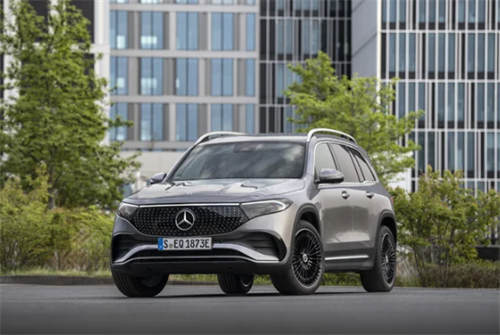
Battery, Charging, and Range:
A central question for any EV owner is how far it can go â not in marketing brochures, but in your real driving situation. The EQB is offered in two main configurations: the EQB 260 (single motor) and the EQB 350 4MATIC (dual motor). According to Mercedes-Benz technical documents, both use a 73.5 kWh battery, with the EQB 260 rated for 600 km CLTC range and the EQB 350 for 512 km CLTC rangeâfigures that must be tempered with real-world conditions (Mercedes-Benz specs, 2024).
On U.S. EPA testing â a stricter measure than Chinese or CLTC standards â the EQB 250+ (a variant close to the 260) is officially rated at around 250 miles (~402 km) of range, while all-wheel-drive variants fall closer to 207 miles (~333 km) (Consumer Reports, 2025).
Real-world owners often see range variations depending on climate, speed, terrain, and driving style. For example, winter conditions and higher speeds can reduce usable range by 15â25% compared to advertised numbers â a reality confirmed in owner forums where winter range sometimes hovers near 200â240 km (125â150 miles) in cold weather conditions. These findings are consistent with broader EV range performance trends.
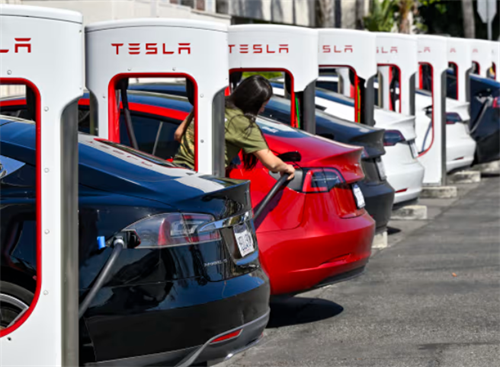
Charging behavior is equally important. The EQB supports DC fast charging up to about 100 kW, capable of taking the battery from 10â80% in roughly 30â45 minutes under ideal conditionsâsufficient for planned long trips but slower than many newer EV competitors with high-power charging capabilities. Slow home charging on an 11 kW AC wallbox typically takes around 10 hours to reach full charge (Mercedes-Benz specs, 2024).
Owners planning long distances find that strategic charging stops incorporated into meal breaks or rest sessions make long drives comfortable, even if the EQBâs moderate battery capacity doesnât allow the same nonstop range as larger EVs.
The Luxury Experience
Luxury is not just a price tag â itâs how you feel every time you get behind the wheel. The EQB delivers a clearly premium cabin environment with features often expected at higher trims: dual 10.25-inch displays, customizable ambient lighting, quality leather surfaces, and thoughtful ergonomics that contribute to a feeling of refined comfort during daily use. Many owners praise the interior for its quietness, premium materials, and advanced tech layout.
Seven-seat flexibility is a headline feature. The second row offers comfortable space for adults, and while the third row is smaller and better suited to children or short journeys, it adds real versatility for families juggling occasional extra passengersâsomething many competitors in the compact EV segment lack.
Driver-assist technologies including adaptive cruise control, lane-keeping assist, and safety systems like automatic emergency braking reinforce a modern, premium driving experience. While occasional software recalibration is reported, these systems generally function competently for everyday commuting and highway travel.
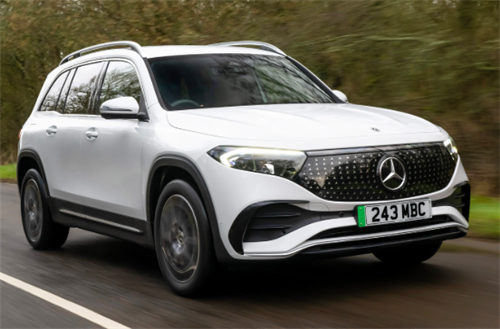
Depreciation and Resale Value:
Depreciation is one of the most critical factors for owners considering long-term value. The EQBâs five-year projected depreciation of around $30,744 USD points to the reality that luxury EVs tend to lose value faster than comparable gasoline models. While this depreciation is partly due to broader EV market dynamicsâsuch as shifting tax incentives and rapid battery technology advancesâit has an outsized impact on total cost to own, often overshadowing fuel savings.
Furthermore, resale values can vary significantly by market. In China, for example, aggressive dealer discounts have reduced EQB transaction prices to around 60â70% of list price in some cases, translating to even softer resale values over time. These market nuances underscore that buyers should evaluate long-term economics holistically rather than relying on short-term incentives alone.
Family Use Cases and Practicality:
For family use, the EQB stands out for daily practicality. Its interior space, cargo flexibility, and ease of urban driving make it a genuine daily driver, while its optional third row adds rare adaptability in the compact EV class. The adjustable seating arrangementâfolding the third row increases cargo volume substantiallyâmeans the EQB serves both routine errands and occasional larger load tasks with ease.
Real owner accounts from long tripsâsuch as consistent 600 km single-day journeys with charging stops at well-timed intervalsâdemonstrate that with planning, the EQB can handle extended travel without undue stress. Owners report that maintaining a 20% state-of-charge buffer before planned stops and pairing charging with natural breaks (meals, rest) make long distance trips more efficient and predictable.
After three years of real-world use, the Mercedes-Benz EQB proves itself a refined, practical, and luxurious compact electric SUV that succeeds in delivering premium comfort, advanced technology, and well-balanced performance for families. Its strengthsâspacious interior, sophisticated tech, daily comfort, and sensible energy efficiencyâmake it a compelling choice for urban and suburban lifestyles.
However, prospective buyers must weigh depreciation risk, moderate charging speeds, and range variability against the EQBâs luxury experience. Unlike some higher-range EV competitors with ultra-fast charging or extended EPA range figures, the EQB emphasizes balanced everyday use and premium feel over headline-grabbing specs.
For those with reliable home charging, realistic expectations about range, and a desire for a luxury EV that integrates seamlessly into daily life, the EQB represents a rewarding choice. Its blend of comfort, practicality, and sophistication ensures it remains a strong contender in the growing luxury EV landscape.
References:
[1] Consumer Reports. (2025). 2025 Mercedes Benz EQB reliability and range report. Retrieved December 2025, from https://www.consumerreports.org/cars/mercedes-benz/eqb/2025/reliability/
[2] Kelley Blue Book. (2025). 2025 Mercedes Benz Mercedes EQ EQB cost to own. Retrieved December 2025, from https://www.kbb.com/mercedes-benz/mercedes-eq-eqb/2025/cost-to-own/
[3] Mercedes-Benz. (2024). EQB technical specifications brochure. Retrieved December 2025, from Mercedes-Benz official documentation.
[4] Sina Auto. (2024, December 10). Sales, discounts, and market pricing for Mercedes Benz EQB. Retrieved December 2025, from https://auto.sina.com.cn/info/cx/2024-12-10/detail-incyyhun8562453.shtml
[5] InsideEVs. (2024). Mercedes Benz EQB EPA range details. Retrieved December 2025, from https://insideevs.com/news/723458/2024-mercedes-eqb-epa-range/
Recommended for you